Car Rental for a Ski Trip: Palandöken and Sierra Nevada
What to check when renting a car for Erzurum Palandöken and Granada Sierra Nevada: winter tyres, snow chains,…
Seat count alone is misleading — the real constraint is usually the boot. A three-question guide to picking the right class.
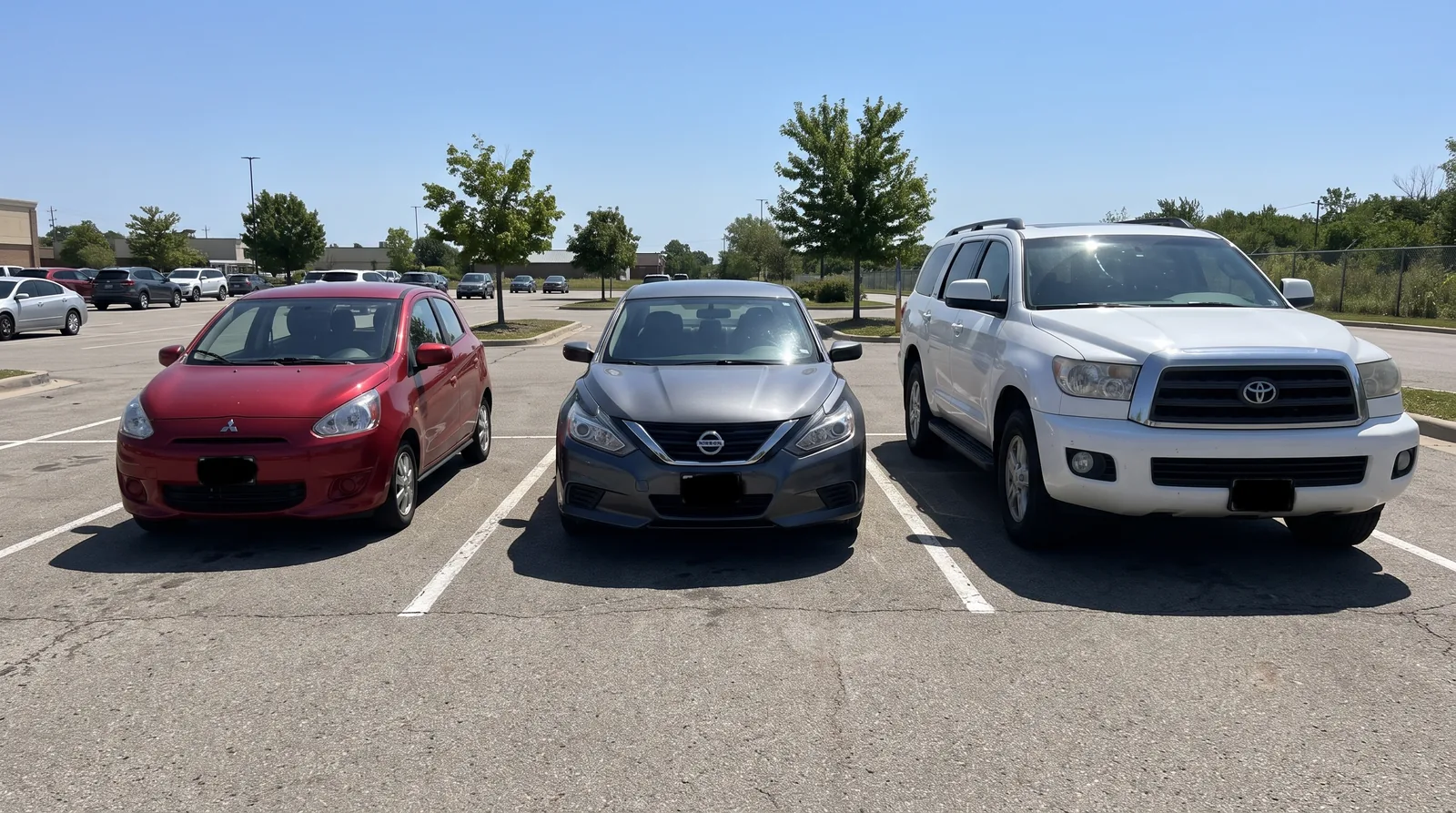
The most common mistake when renting is deciding on seat count alone. A car listed as a five-seater really does carry five people, but it may not carry five people's luggage. Work through three questions instead.
| Class | Carries comfortably | Suits |
|---|---|---|
| Mini | 2 people + 1 large case | Couples, short city trips |
| Economy | 2–3 people + 2 cases | The most common choice, good balance |
| Compact | 4 people + 2 large, 1 small | Families, medium distances |
| Saloon | 4 people + 3 cases | Long-distance comfort |
| SUV | 4–5 people + 3–4 cases | Higher ride, rough roads |
| Minivan (7–9) | 6–8 people + luggage | Larger groups |
A practical rule: if you plan to fill every seat, consider going one class up. Five adults and five suitcases in a five-seater works in theory, not in practice.
An automatic makes a clear difference in city traffic and on steep roads. A manual is usually cheaper and more widely available.
If you have not driven a manual for years, paying extra for an automatic beats a learning curve mid-holiday. Bear in mind too that automatics sell out early in summer.
Listings often show a model name followed by "or similar". It means the company will provide a car from the same class, not necessarily that exact model. It is standard practice across the industry.
If a specific model matters to you — because boot space is critical, for instance — say so in your booking request. The company may not be able to guarantee it, but you will at least know in advance what is coming.
Going one class up costs a modest amount per day; choosing the wrong class affects the whole trip. When in doubt, pick the larger boot.
What to check when renting a car for Erzurum Palandöken and Granada Sierra Nevada: winter tyres, snow chains,…
Routes to explore by car in Mallorca, Ibiza, Tenerife and on the Turkish coast, with practical tips for parki…
What you need at the rental desk in Spain, how age limits and deposits work, and the road rules that catch vi…
We use the cookies the site needs to work. With your permission we add measurement cookies for visit statistics; if you decline, none are loaded. Cookie policy